| Name | Meaning | Era by Decade | Source |
|---|---|---|---|
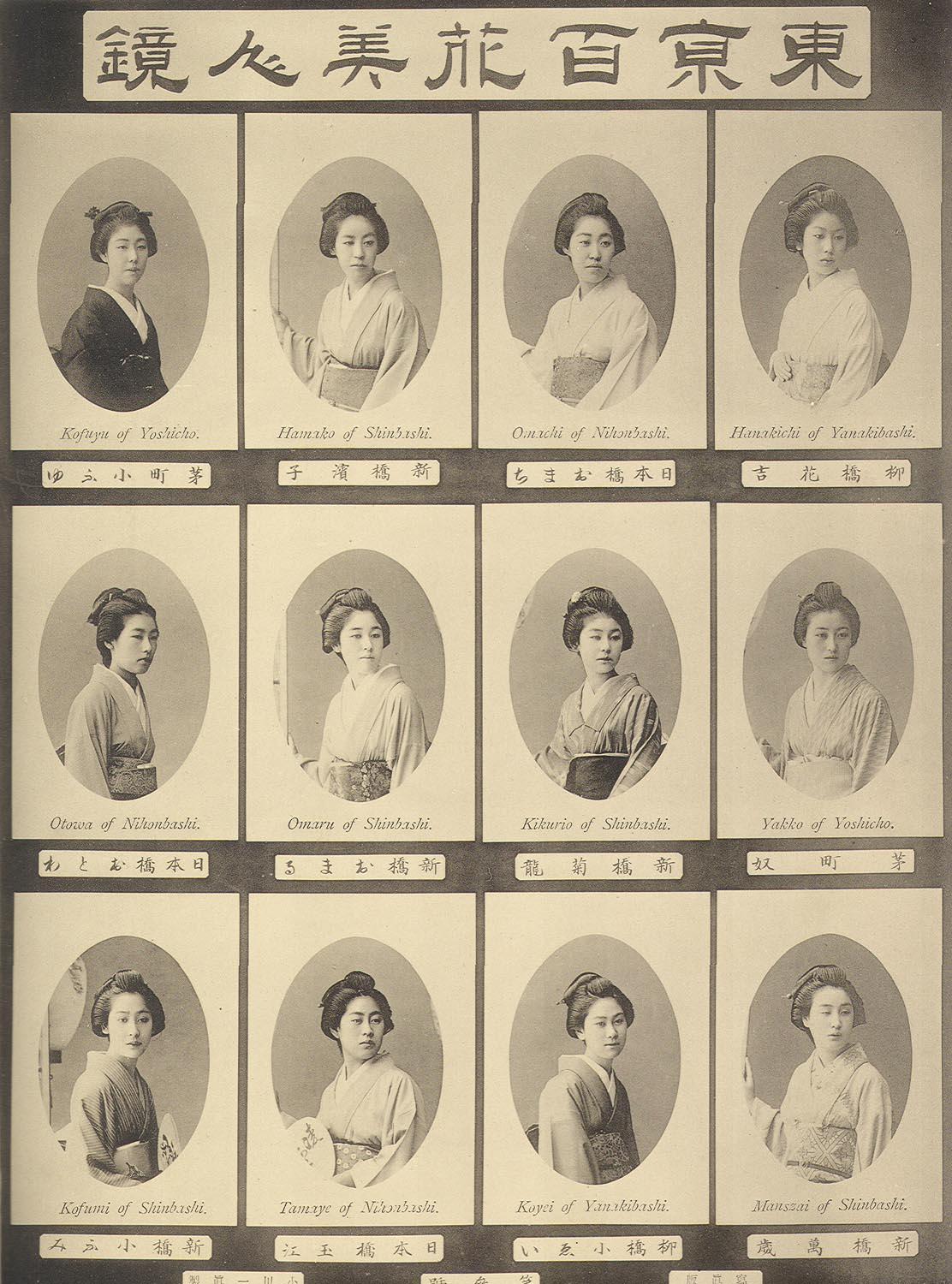
| Hamako | Seashore child (濱子) | 1890’s 1910’s | Ogawa 1913 Miyako Odori |
| Hamayū | Seashore + courage (濱勇) | 1910’s | link |
| Hamazō | Possibly “seashore + third son (浜三)” | 1870’s | link |
| Han | Written in hiragana: はん | 1910’s | 1913 Miyako Odori |
| Hanachiyo | Eternal flower (花千代) | 1910’s | 1913 Miyako Odori |
| Hanaji | Flower + next (花次) | 1890’s | Ogawa |
| Hanakichi | Flower of bliss, or lucky flower (花吉) | 1890’s 1910’s | Ogawa Fujimoto |
| Hanako | Flower child (花子) | 1910’s | 1913 Miyako Odori |
| Hanamatsu | Flower + pine tree (花松) | 1810’s | Urakusai |
| Hanaryō | Flower dragon (花龍) | 1890’s | Hearn2 |
| Hanayakko | Probably “flower handmaiden (花奴)” | 1910’s | Fujimoto |
| Hane | Written in furigana: はね | 1790’s | Eishi |
| Harukichi | Possibly “fortunate spring (春吉)” | 1870’s | link |
| Haruko | Spring child (春子) | 1890’s 1900’s 1910’s | Ogawa Lanston link |
| Harusuke | Spring helper (春助) | 1910’s | 1913 Miyako Odori |
| Hatsu | Written in hiragana: はつ. Possibly intended to mean “firstborn (初).” | 1910’s | 1913 Miyako Odori |
| Hatsuko | Innocent/artless/fresh child (literally, “first-time/beginning child”) (初子) | 1920’s | link |
| Hatsutarō | Firstborn son (初太郎) | 1910’s | 1913 Miyako Odori |
| Hatsuyo | Firstborn generation (初代) | 1920’s | link |
| Hidechiyo | Eternally excellent (秀千代) | 1910’s 2000’s? | Zenkoku no Daihyouteki Bijin Shinbashikumiai |
| Hidechō | Excellent butterfly (秀蝶) | 1910’s | 1918 Naniwa Odori |
| Hideji | Next excellence, or second excellent one (秀次) | 1910’s | 1913 Miyako Odori |
| Hidemi | Excellent beauty (秀美) | 1910’s | 1918 Naniwa Odori |
| Hideryū | Possibly “excellent dragon (秀龍),” implying ascending levels of excellence. | 1910’s | Fujimoto |
| Hidetarō | Excellent first son (秀太郎) | 1910’s | 1918 Naniwa Odori |
| Hidewaka | Excellent youth (秀若) | 1910’s | 1918 Naniwa Odori |
| Hideyakko | Excellent handmaiden (秀奴) | 1910’s | 1918 Naniwa Odori |
| Hidezuru | Excellent crane (秀鶴) | 1910’s | 1918 Naniwa Odori |
| Hinachō | Adorable little butterfly [lit. doll-butterfly] (雛蝶) | 1910’s 1940’s? | 1920 Kamogawa Odori 2010 Kyo Odori |
| Hinagiku | Adorable little chrysanthemum [lit. doll-chrysanthemum] (雛菊) | 1890’s | Hearn2 |
| Hinako | Hina + child (ひな子). Possibly intended to mean “adorable little one (雛子).” | 1910’s | 1913 Miyako Odori |
| Hinazuru | Hina + crane (ひな鶴). Possibly intended to mean “adorable little crane (雛鶴).” | 2000’s | link |
| Hisa | Written in hiragana: ひさ. Possibly a reference to 久, “a long time.” | 1910’s | 1913 Miyako Odori |
| Hisachō | Long-continued butterfly (久蝶) | 1990’s? | link link |
| Hisae | Long-lasting glory (久栄) | 1930’s | link |
| Hisaei | Possibly “long-lasting glory (久栄)” or “congratulations and glory (寿栄)” | 1910’s | Fujimoto |
| Hisafuku | Long-continued good fortune (久福) | 1930’s | 1933 Miyako Odori |
| Hisagiku | Long-continued chrysanthemum (久菊) | 1930’s | link |
| Hisako | Enduring (in the sense of long-continued) child (久子) | 1910’s | 1913 Miyako Odori Fujimoto |
| Hisamomo | Long-continuing peach (久桃) | 2010’s | link |
| Hisano | Long-lasting + no [name ending] (久乃) | 2000’s | link |
| Hisasuzu | Long-lasting bell (久鈴) | 2010’s | link |
| Hisayo | Long-lasting generation (久代) | 1920’s 1950’s | 1928 Kamogawa Odori link |
| Hisazuru, Hisatsuru | Enduring crane (久鶴) | 1930’s | link |
| Ichi | Marketplace (市), a traditional name for girls. | 1910’s | 1920 Kamogawa Odori |
| Ichiei | Marketplace + splendid (市栄) | 1810’s | Urakusai |
| Ichiemi | 1910’s: First smile (一笑) 2000’s: Market + smile/laughter (市笑) | 1910’s 2000’s | 1918 Naniwa Odori link |
| Ichiharu | Market + clear, bright, cheerful (市 晴) | 2000’s | link |
| Ichiho | Market + ear of grain (市穂) | 1980’s? | link |
| Ichika | Market + perfume (市香) | 1910’s | link 1920 Kamogawa Odori |
| Ichimame | Market + mame (市まめ) | 2000’s | link |
| Ichimomo | Market + peach (市桃) | 2000’s | link |
| Ichiraku | Market + pleasure (市楽) | 2000’s | link |
| Ichiryū | First dragon (一龍) | 1900’s | link |
| Ichisayo | Market + sayo (市さよ) | 1990’s | link |
| Ichitarō | First son (一太郎) | 1910’s | 1918 Naniwa Odori |
| Ichiteru | Market + shining (市照) | 2000’s 2010’s | link link |
| Ichitomi | 2000’s: Most abundant (一 富) 2010’s: Market + tenfold beauty (市十美) | 2000’s 2010’s | link link |
| Ichiume | Market of plum blossoms (市梅), the name of Liza Dalby’s oneesan. | 1960’s | link |
| Ichiya | Market + complete (市彌) | 1910’s | link |
| Ichiyakko | First among handmaidens (一奴) | 1910’s | 1913 Miyako Odori |
| Iku | Possibly “nourishing (生).” The kanji literally means “life,” but Hearn translates it differently. | 1870’s | Satow |
| Ikumatsu | 1850’s: Many pine trees (幾松). Iku is difficult to translate, but roughly speaking, it increases the number of whatever follows it. 1910’s: Iku + pine tree (いく松) | 1850’s 1910’s | Dougill link 1914 Miyako Odori |
| Ima | Possibly “now (今).” | 1910’s | Fujimoto |
| Imayoshi | 1810’s | Stanley | |
| Ine | Possibly “young rice plant (稲),” implying a nurturing nature | 1910’s | Fujimoto |
| Iroha | Written in hiragana: いろは. May mean “coloring, makeup (彩)” or “birch, maple (椛).” | 1810’s | Urakusai |
| Ishino | Written in hiragana: いしの. Possibly intended to mean 石野, stone + field [common ending for female names], implying one whose strength of character is as strong asd unyielding as a stone. | 1810’s | Urakusai |
| Ishiyakko | Stone + handmaiden (石奴). Stone connotes firmness of character. | 1910’s | 1918 Naniwa Odori |
| Iso | Written in hiragana: いそ | 1810’s | Urakusai |
| Isoei | Flourishing seashore (磯栄) | 1810’s | Urakusai |
| Itozuru | Thread + crane (糸鶴) | 1890’s | Hearn2 |
| Kama | Written in hiragana: かま. Kama was a traditional girl’s name meaning “kettle (釜).” | 1880’s | Toyohara Chikanobu |
| Kame | Written in hiragana: かめ. May refer to one who is as long-lived as the turtle (亀). | 1810’s | Urakusai |
| Kameji | Second turtle (亀二) | 1810’s | Urakusai |
| Kamekichi | Turtle + good fortune (亀吉), connoting fortune as good as that of the long-lived, nearly immortal turtle. In Japan, turtles were believed to live for 10,000 years, a potent symbol in a culture where the promise of longevity was prized above almost everything else. | 1790’s | link |
| Kameko | Kame + child (かめ子). Possibly means “turtle child,” or “girl who is as long-lived as the turtle (亀子).” | 1890’s | Ogawa |
| Kaneha | Golden leaf (金葉) | 1910’s | 1918 Naniwa Odori |
| Kanemi | Gold + beauty (金美) | 1910’s | 1918 Naniwa Odori |
| Kanoaki | Granting illumination (叶明) | 2000’s | link |
| Kanoemi | Granting a smile (叶笑) | 2010’s | link |
| Kanoka | Granting achievement/results (叶果) | 2000’s | link |
| Kasen | The first female geisha of the Yoshiwara, a former yūjo (high-ranking courtesan) who paid off her debts and went into business for herself as an entertainer. | 1760’s | Downer |
| Katsuchiyo | Victorious eternity (勝千代) | 1910’s | 1918 Naniwa Odori |
| Katsue | Victory + bay [female name ending] (勝江) | 2000’s | 2005 Kyoto Hanamachi Book |
| Katsugoro | Victory + fifth son (勝五郎) | 1910’s | 1918 Naniwa Odori |
| Katsuha | Victorious leaf (勝葉) | 1910’s | 1918 Naniwa Odori |
| Katsuichi | Victorious + first/best (勝一) | 1910’s | 1918 Naniwa Odori |
| Katsuji | Victory + next (勝次); the next victory, or the second girl named Victory | 1890’s | Ogawa Hearn2 |
| Katsuna | Victorious Nara (勝奈) | 2010’s | link |
| Katsune | The sound of victory (勝音), or victorious sound | 2010’s | link |
| Katsuru | Victorious lapis lazuli (勝瑠) | 2000’s | link |
| Kayo | Beautiful generation (加代) | 1870’s | link |
| Kichihana | Lucky flower (吉花) | 1920’s | 1928 Kamogawa Odori |
| Kichiyakko | Lucky maidservant (吉奴) | 1920’s | 1928 Kamogawa Odori |
| Kichiyo | Lucky generation (吉代) | 1910’s | 1920 Kamogawa Odori |
| Kichiyū | Lucky and brave (吉勇) | 2000’s? | link |
| Kichizō | Fortunate third son (吉三) | 1920’s | 1928 Kamogawa Odori |
| Kiku | Written in hiragana: きく. Probably intended to mean “chrysanthemum (菊).” | 1810’s | Urakusai |
| Kikuka | Chrysanthemum blossom (菊花) | 1890’s | Ogawa |
| Kikumaru | Precious chrysanthemum (菊丸) | 2000’s? | link |
| Kikumatsu | Chrysanthemum + pine tree (菊松) | 1810’s | Urakusai |
| Kikuno | Chrysanthemum + no [name ending] (菊乃) | 2000’s | link |
| Kikuryō | 1890’s: Chrysanthemum dragon (菊龍) 1910’s: Chrysanthemum and willow (菊柳) | 1890’s 1910’s | Ogawa 1913 Miyako Odori |
| Kikutsuru | Chrysanthemum + tsuru (菊つる) | 2000’s | link |
| Kikuya | The very first named female geisha, recorded at Fukagawa in the 1740’s. She was reputed to be “good at playing the shamisen and singing.” Given the career path of other young women of her day, she probably started work as an odoriko, a dancing girl, in her early teens, and transitioned to being a geisha when she turned 16 or 17 and could no longer wear the long hanging sleeves that were essential to odoriko. Like many another odoriko, she may have engaged in prostitution on the side. Her name was spelled 菊弥, or “chrysanthemum + more and more.” | 1740’s | Seigle link |
| Kikuyakko | 1913: Chrysanthemum handmaiden (菊奴) 1918: Rejoicing and long-enduring maidservant (喜久奴) | 1910’s | 1913 Miyako Odori 1918 Naniwa Odori |
| Kikuyu | Chrysanthemum evening (菊夕) | 2000’s | link |
| Kimiei | Sovereign splendor (君榮) | 1910’s | 1913 Miyako Odori |
| Kimigiku | Sovereign + giku (君ぎく). Probably intended to mean “sovereign chrysanthemum (君菊).” | 2000’s | link |
| Kimikiku | Sovereign chrysanthemum (君菊) | 1920’s | 1928 Kamogawa Odori |
| Kimina | Peerless Nara (君奈) | 2000’s | link |
| Kimitarō | Peerless firstborn son (君太郎) | 1910’s | Zenkoku no Daihyouteki Bijin |
| Kimitomo | Sovereign friend, or friend of the ruler (君友) | 2000’s | link |
| Kimiyakko | Sovereign handmaiden (君奴) | 1920’s | 1928 Kamogawa Odori |
| Kin | Written in hiragana: おきる. Probably intended to mean “gold (金).” | 1890’s | Ogawa |
| Kin’ei | Golden splendor (金榮) | 1910’s | 1918 Naniwa Odori |
| Kin’ichi | Golden first/best (金一) | 1910’s | 1918 Naniwa Odori |
| Kingo | Golden fifth son (金五) | 1900’s | link |
| Kingoro | Golden fifth son (金五郎) | 1910’s | 1918 Naniwa Odori |
| Kinhei | Golden peace (金平) | 1910’s | 1918 Naniwa Odori |
| Kinko | Near child (近子) | 1950’s | link |
| Kinmatsu or Kanematsu | Golden pine tree (金松) | 1910’s | 1918 Naniwa Odori |
| Kinpachi | Gold + eight (金八), with the connotation of “steadily increasing wealth” | 1890’s | Ogawa |
| Kinroku | Golden record (金錄) | 1910’s | 1918 Naniwa Odori |
| Kinryō | Golden dragon (金龍) | 1890’s | Hearn2 |
| Kinryū | Golden dragon (金龍) | 1910’s | 1918 Naniwa Odori |
| Kinshi | Written in hiragana: きんし | 1890’s | Ogawa |
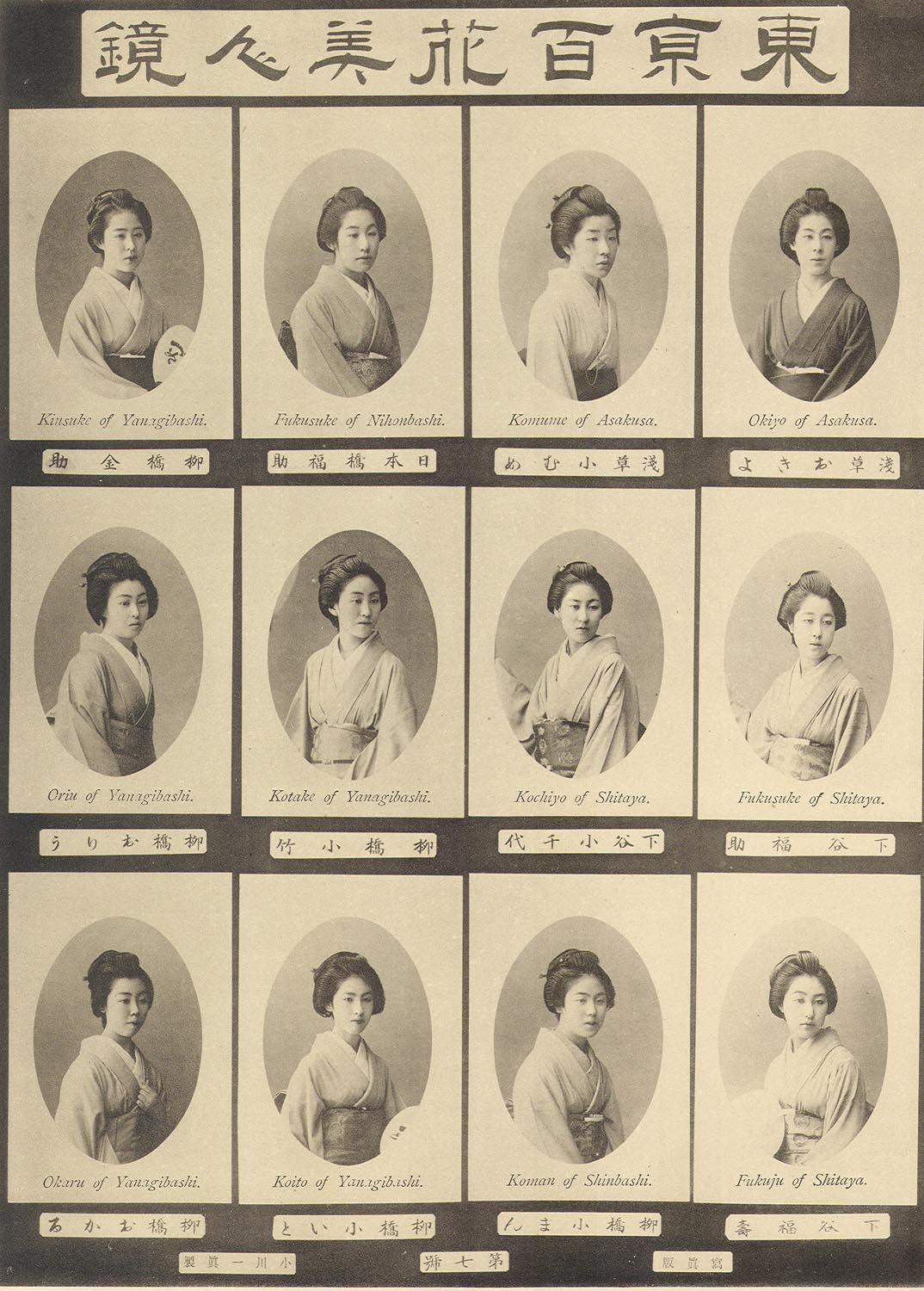
| Kinsuke | Golden helper (金助) | 1890’s | Ogawa |
| Kinu | Written in hiragana: きぬ. Kinu is a traditional girl’s name that means “silk (絹).” | 1910’s | 1913 Miyako Odori |
| Kinyo | Written in hiragana: きんよ . | 1910’s | 1918 Naniwa Odori |
| Kinzō | Golden third son (金三). | 1910’s | 1918 Naniwa Odori |
| Kitanomatsu | Pine tree of the north (北の松) | 1810’s | Urakusai |
| Kiyo | Written in hiragana: おきよ. Kiyo (清) was a common girl’s name of the period, meaning “clear, bright, beautiful.” | 1890’s | Ogawa |
| Koaki | Little Asian hope (小亜希) | 1990’s | link |
| Koden | 1870’s | link | |
| Kodzuru/Kozuru | Possibly “little stork” | 1870’s | link |
| Koen | Little charm | 1890’s | Hearn2 |
| Kofuku | Little fuku (小ふく) | 2000’s | link |
| Kofusa | Little fusa (小ふさ). Probably intended to mean “little tassel (小房).” | 1890’s | Ogawa |
| Kogiku | 1810’s: Little giku (小きく), probably intended to mean “little chrysanthemum (小菊).” 1890’s: Little chrysanthemum (小菊) 1960’s: Child + rare + long-continuing (子希久) | 1810’s 1890’s 1960’s | Urakusai Hearn2 1968 Calendar |
| Koi | Koi (carp) (鯉 or こい), a name referring to what Longstreet and Longstreet refer to as the koi’s “voluptuous grace and unique coloring.” It may also be a reference to the koi’s longevity. | 1880’s | Longstreet |
| Koiku | Little perfume (小郁) | 2000’s | link |
| Kojako | Possibly “little snake (小蛇子),” meaning a girl who was born in the Year of the Snake (implying a mysterious, refined, and seductive nature), or “little wicked one (小邪子).” | 1920’s | link |
| Komagiku | Possibly “filly + chrysanthemum (駒菊)” | 1910’s | Fujimoto |
| Komaji | 1810’s: Filly’s path (駒路) 1910’s: Little + ma + two (小ま二) | 1810’s 1910’s | Urakusai 1913 Miyako Odori |
| Komako | Possibly “filly (駒子)” | 1910’s | Fujimoto |
| Komame | Little bean (小豆) | 1910’s | 1913 Miyako Odori |
| Komari | Little jasmine (小莉) | 2000’s? | link |
| Komaru | Little + maru (hiragana). Possibly intended to mean “little precious one.” | 1890’s | Ogawa |
| Komasu | 1910’s: Little dance (小舛). The masu kanji is extremely rare—it appears in two personal names and as the name of the “dancing legs” radical, but nowhere else. 1960’s: Little masu (小ます). Possibly a nickname for a woman named Masu, meaning “ten thousand congratulations (万寿)” among many, many other readings. | 1910’s 1960’s? | 1913 Miyako Odori link |
| Komomo | 1910’s: Child + peach. This use of “child” in front of a name is extremely rare. 1990’s, 2000’s: Little peach (小桃) | 1910’s 1990’s 2000’s | link link 2005 Kyoto Hanamachi Book |
| Komume | Written in hiragana: こむめ. Possibly intended to mean “little plum-blossom (小梅).” | 1890’s | Ogawa |
| Koriki | Possibly “little strong one (小力),” among many other meanings. | 1870’s | Satow |
| Korin | Little bell (小凜) | 1910’s 2000’s 2010’s | Fujimoto link link |
| Koroku | Little six (小六). Six is an auspicious number, so Koroku’s name may commemorate an event that happened on the sixth day of the sixth month, or otherwise involved a notable number of sixes. | 1890’s | Ogawa |
| Kosaki | Little blossom (小咲) | 1910’s | 1913 Miyako Odori |
| Kosaku | Little piece of work, or little harvest (小作). Possibly a nickname for a girl whose name started with the 作 character. | 1910’s | 1913 Miyako Odori |
| Kosan | Possibly “little three (小三)” or “little mountain (小山).” | 1910’s | Fujimoto |
| Kosei | Possibly “little purity (小清)” | 1890’s 1900’s | Ogawa link |
| Kosen | Little folding fan (小 扇) | 1870’s 1990’s 2000’s | link link link |
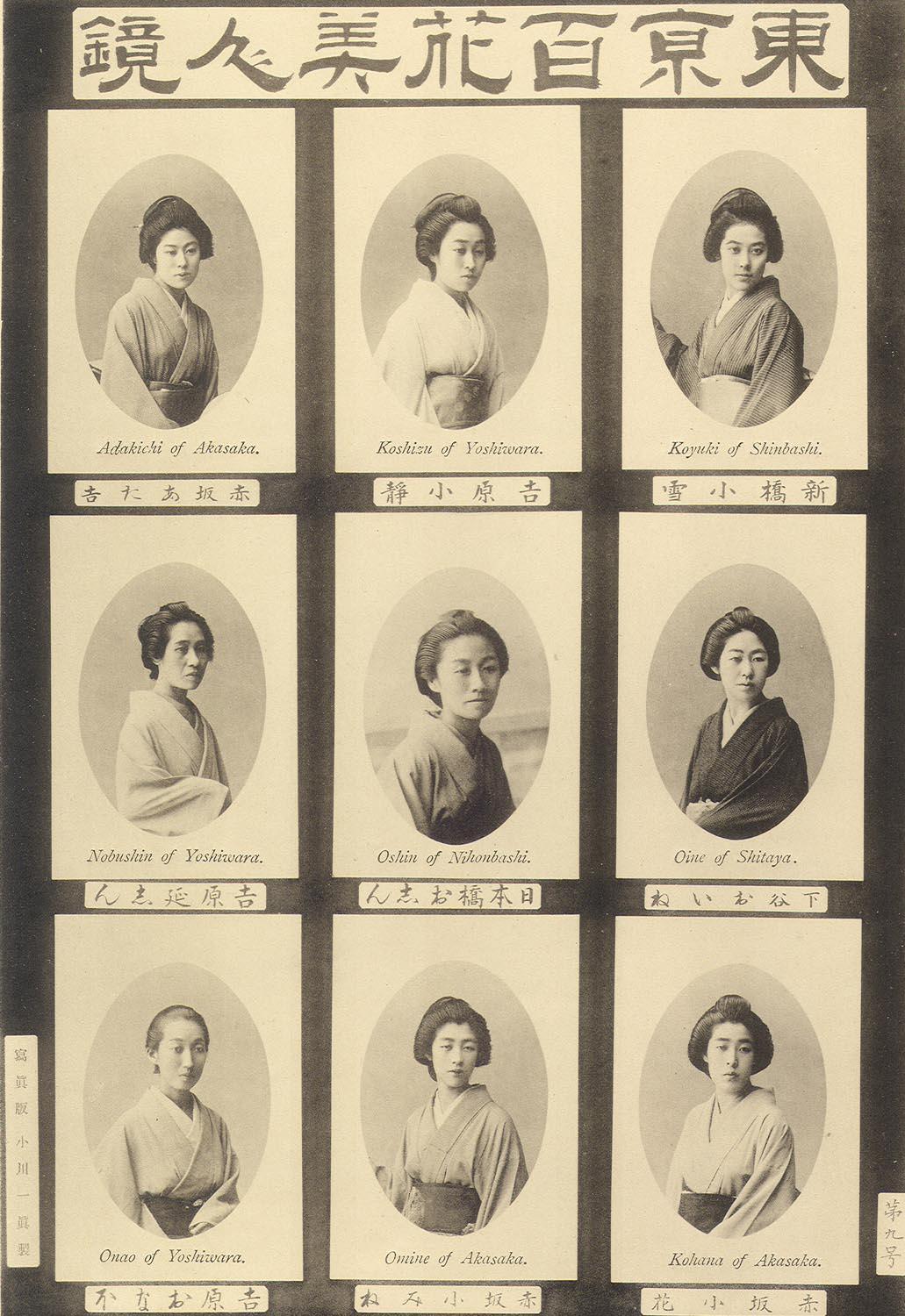
| Koshizu | Little tranquil one (小静) | 1890’s | Ogawa |
| Kosome | Possibly “little dyed one (小染)” | 1910’s | Fujimoto |
| Kosue | Little end [of something] (小末) | 1930’s | link |
| Kosuzu | Little bell (小鈴) | 2000’s? | link |
| Kotaka | “Little high,” possibly a nickname for a tall girl | 1890’s 1910’s | Ogawa Fujimoto |
| Kotake | Little bamboo (小竹) | 1870’s 1890’s 1910’s | link Ogawa Fujimoto |
| Kotama | Little jewel, or little precious one (小玉) | 1910’s | 1913 Miyako Odori |
| Kotarō | Little firstborn son (小太郎) | 1920’s | 1928 Kamogawa Odori |
| Kotatsu | Little dragon (小辰), referring to the zodiacal Year of the Dragon rather than the common word for the dragon. | 1870’s? 1890’s | link Ogawa |
| Koteru | 1810’s: Little teru (小てる). Probably intended to mean “little shining one (小照).” 1890’s, 1930’s: Little shining one (小照) | 1810’s 1890’s 1930’s | Urakusai Ogawa link |
| Kotetsu | Possibly “little iron one (小鉄)” | 1870’s | link |
| Koto | Possibly “koto (お琴 or おこと),” a reference to the beauty of the Japanese harp. | 1900’s | |
| Kotobuki | Longevity, or congratulations. Possibly written with the 寿 or 壽 character, or in hiragana: ことぶき. | 1870’s | Hearn |
| Kotoei | Koto + bay [female name ending] (こと江) | 1910’s | 1913 Miyako Odori |
| Kotogiku | Koto (Japanese harp) + chrysanthemum (琴菊) | 1910’s | 1913 Miyako Odori |
| Kotoha | Koto [Japanese harp] + leaf (琴葉) | 2000’s | link |
| Kotoji | Next koto (Japanese harp), or second woman who is named after the koto (琴次) | 1890’s | Ogawa |
| Kotomi | 1920’s: Little ascending beauty (小登美) 1950’s: Child + door + beautiful (子戸美) 2000’s: Beautiful koto [Japanese harp] (琴美) | 1920’s 1950’s 2000’s | 1928 Kamogawa Odori link link |
| Kotono | Koto [Japanese harp] + no [name ending] (琴 乃) | 2000’s | link |
| Kotoyo | 1890’s | Ogawa | |
| Kotsuma | Little + tsuma (小つま). Tsuma (妻 or 夫) means “wife,” and was formerly used between lovers to mean “dear.” Kotsuma may therefore mean “little dear one,” giving the gentlemen she talked to the illusion of instant intimacy. | 1890’s | Ogawa |
| Koume | “Little plum blossom (小梅),” nickname of the geisha Umewaka (Plum-blossom bud) as well as the complete geimei of many other geisha. | 1810’s 1920’s 2000’s 2010’s | Urakusai link link link |
| Kouta | Little + uta. Possibly intended to mean “little song (小歌).” | 1890’s | Ogawa |
| Koyachiyo | Probably “little eightfold eternity (小八千代)” | 1910’s | Fujimoto |
| Koyakko | Little handmaiden (小奴). Apprentice name of the geisha who grew up to be named first Yakko, then Sadayakko. Later geisha also adopted the name. | 1880’s 1910’s | link link |
| Koyana | Written in hiragana: こやな | 1910’s | 1913 Miyako Odori |
| Koyei | Little yei (小ゑい). Yei is spelled with the archaic ゑ hiragana, and can also be pronounced Ei or Wei. | 1890’s | Ogawa |
| Koyō | Little sparkle (小耀) | 2000’s | link |
| Ko-yokko | Probably a misspelling of Koyakko, “little handmaiden (小奴).” | 1910’s | Fujimoto |
| Koyone | Little grains of rice (小米). Yone, the word for grains of rice that are ready to be cooked and eaten, used to have a secondary meaning of “wealth”—a less slangy analogue of the American use of “bread” to mean “money.” | 1950’s | 1960 Kitano Odori |
| Koyoshi | 2010’s: Little yoshi (小よし). Possibly intended to mean “little good one (小善).” | 2000’s? 2010’s | Shigemori Teahouse blog |
| Koyuka | Little yuka (小ゆか). Yuka may stand for purple or violet (紫), destiny (縁), or perfume (香), among many, many other possible meanings. | 1910’s | 1913 Miyako Odori |
| Koyuki | 1890’s: Little snow (小雪) 1940’s: Little blessings (小幸) | 1890’s 1910’s 1940’s? 2000’s | Ogawa Fujimoto 1952 Osaka Odori link |
| Koyumi | Little beautiful friend (小友美) | 2000’s | link |
| Kozakura | Little cherry blossom (小桜). Hearn translates this name as “little cherry tree,” but sakura usually refers to the flowers. | 1890’s | Hearn2 |
| Kuma | Written in hiragana: くま. Possibly intended to mean bear (熊). Bears in Japan are associated with courage, strength, and perseverance, and are considered to be devoted mothers [link]. | 1810’s | Urakusai |
| Kumakichi | Fortunate bear (熊吉) | 1810’s | Urakusai |
| Kumano | Written in hiragana: くまの. Possibly intended to mean “bear + no [name ending] (熊乃).” | 1810’s | Urakusai |
| Kumayoshi | 1810’s | Stanley | |
| Kunigiku | Country/state/province + giku (國ぎく). Probably intended to mean “chrysanthemum of the country (國菊).” | 1910’s | 1913 Miyako Odori |
| Kyō | Capitol (京), possibly referring to Kyoto. A traditional girl’s name. | 1910’s | 1913 Miyako Odori |
| Kyōji | Peace of the capitol (京治), possibly referring to Kyoto. | 1920’s | 1928 Kamogawa Odori |
| Kyōka | Excellent apricot ( 杏佳) | 2000’s | link |
| Kyoko | 1950’s?: Apricot child (杏子) 1990’s?: Perfume child (香子) | 1950’s? 1990’s? | link Shinbashikumiai |




Updated 12/16/2014