| Name | Meaning | Era by Decade | Source |
|---|---|---|---|
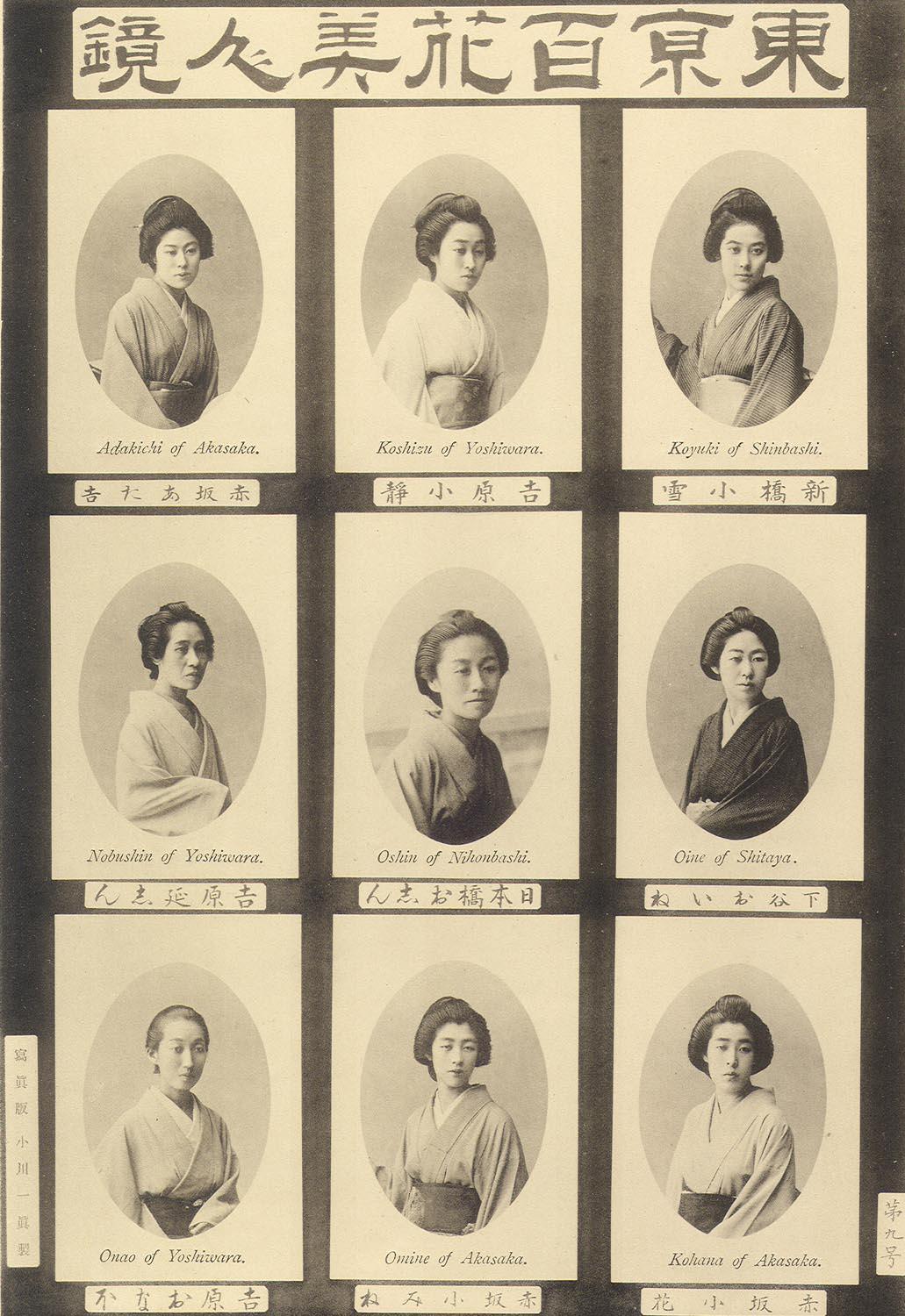
| Adakichi | Adakichi (resenting good luck, 仇吉) appeared as a geisha character in a popular and much-adapted 1830’s novel, Shunshoku Umegoyomi. I don’t know whether the name predated the novel, but in later years, there were real Adakichis in the floating world. The 1890’s geisha Adakichi wrote her name partially in hiragana, Ada + luck, thereby removing the meaning of “resentful, enemy, opponent” from the original name. | 1830’s 1890’s | link Ogawa |
| Ai | Written in hiragana: あい. Probably intended to mean love (愛). | 1810’s | Urakusai |
| Aichiyo | Love + eternal (愛千代) | 1920’s | link |
| Aihachi | Beloved + eight (愛八), with the connotation of being increasingly loved or increasingly loving. | 1890’s | link |
| Aika | Loving/beloved and beautiful (愛佳) | 1910’s | 1913 Miyako Odori |
| Aikichi | “Blessed love (愛吉),” according to Hearn. Written with characters meaning “love” and “good luck.” | 1870’s | Hearn |
| Aiko | Loving child (愛子) | 1890’s 1910’s | Ogawa link, 1918 Naniwa Odori |
| Aimatsu | Girl whose love is as steadfast as the pine (愛松) | 1910’s | link |
| Aitarō | Loving firstborn son (愛太郎) | 1910’s | 1913 Miyako Odori |
| Akiko | 1930’s: Autumn child (秋子) 1960’s: One who is as clear and sparkling as a crystal (晶子) | 1930’s 1960’s? | link link |
| Ariko | The original name is illegible. | 1890’s | Ogawa |
| Asa | “Happy dawn,” according to Hearn. Probably written with the kanji for morning, 朝. | 1870’s | Hearn |
| Asakichi | “Joyous sunrise,” according to Hearn. Probably written with the kanji for morning and luck, 朝吉. | 1870’s | link |
| Asao | Shallows of a river + –o [female name ending] (浅尾) | 1810’s | Urakusai |
| Ayakazu | Splendidly colorful ruler (絢佳司) | 2000’s | link |
| Ayako | Asian arrow child (亜矢子) | 2010’s | link |
| Ayako | Child of patterned cloth (綾子). Pronounced rinzu, the same combination of characters means “figured satin.” The name refers to the gorgeously figured clothes of a geisha. | 1910’s | 1913 Miyako Odori |
| Ayano | Aya + field [female name ending] (あや野) | 2000’s | link |
| Azuma | Possibly “spring (春),” “east (東),” or “thunder (雷),” among many possible readings. | 1890’s | Ogawa |
| Baichō | Plum-blossom butterfly (梅蝶). 梅 is an exceedingly rare character for plum-blossom, and B is an exceedingly rare sound for the start of a female name—voiced consonants like B, D, and G are considered less refined than unvoiced consonants like P, T, and K. Overall, an unusual and memorable geimei. | 1910’s | 1913 Miyako Odori |
| Baishō | Ascending plum-blossom (梅昇) | 1910’s | 1913 Miyako Odori |
| Botan | Peony, known as the “king of the flowers,” symbol of nobility and feminine beauty. Written in hiragana: ぼたん | 1910’s | 1913 Miyako Odori |
| Charyōei | Tea + good + excellence (茶良榮). This is the only instance of the “tea” element I’ve seen in geimyō. “Charyō” may be intended as a homonym for 茶寮, the room where tea ceremonies are held. | 1910’s | 1918 Naniwa Odori |
| Chieko | 1930’s: One whose glory is thousandfold (千榮子) 1970’s: One whose blessings are thousandfold (千恵子) | 1930’s 1970’s? | link link |
| Chikafuku | Thousandfold blessings and good fortune (千賀福) | 1970’s? | link |
| Chikafumi | Beautiful lotus who has been blessed a thousandfold (千賀芙美) | 2000’s | 2002 Kyoto Hanamachi Book |
| Chikano | Thousandfold elegance + no [female name ending] (千雅乃) | 1940’s | link |
| Chikashizu | Thousandfold blessings and tranquility (千賀静) | 2000’s | 2002 Kyoto Hanamachi Book |
| Chikayoshi | Thousandfold congratulations and beauty (千賀美) | 2000’s | link |
| Chikayū | Thousand congratulations lily (千賀勇) | 1930’s | link |
| Chikayuki | Thousandfold congratulations and blessings (千賀幸) | 2000’s | link |
| Chisako | Thousand-gossamer child (千紗子) | 2000’s | link |
| Chiyo | Possibly “eternal (千代)” | 1940’s? | link |
| Chiyoe | Eternal blessings (千代恵) | 2000’s | link |
| Chiyoha | Eternal leaf (千代葉) | 1900’s 1910’s | link 1913 Miyako Odori |
| Chiyokichi | Eternally fortunate (千代吉) | 1910’s | 1920 Kamogawa Odori |
| Chiyoko | 1910’s and 1960’s: Eternal child (千代子) 2010’s: One with a surplus of wisdom (知余子) | 1910’s 1960’s 2010’s | Fujimoto 1968 Calendar link |
| Chiyoryō | Eternal dragon (千代龍) | 1920’s | 1928 Kamogawa Odori |
| Chiyoteru | Eternal light (千代照) | 1920’s | link |
| Chiyotsuru | Eternal (literally, a thousand years) crane (千代鶴). Lafcadio Hearn glosses the name as “Life as the stork’s for a thousand years.” | 1870’s | Hearn |
| Chiyowaka | Possibly “eternally young (千代若)” | 1920’s | link |
| Chiyoyakko | Eternal maidservant (千代奴) | 1910’s | 1918 Naniwa Odori |
| Chizu | A thousand cranes (千鶴), a common girl’s name. | 2000’s | link |
| Chizuha | Leaf of a thousand cranes (千鶴葉) | 1960’s | 1968 Calendar |
| Chizuru | The modern geisha Chizuru writes her name in hiragana: ちづる. Chizuru is traditionally spelled 千鶴, “a thousand cranes.” | 2000’s? | link link |
| Chō | Butterfly (蝶) | 1910’s | 1913 Miyako Odori |
| Chōchō | Butterfly (蝶々) | 1910’s | 1913 Miyako Odori |
| Dan | Written in hiragana: だん | 1920’s | 1928 Miyako Odori |
| Dan’ei | Dan + splendid (だん榮) | 1950’s? | 1953 Miyako Odori |
| Danji | Dan + reign, be at peace (だん治) | 1930’s | 1933 Miyako Odori |
| Danko, Dango | 1910’s: Sociable child (團子) 1920’s: Dan + child (だん子) | 1910’s 1920’s | link 1926 Miyako Odori |
| Edagiku | Branch of chrysanthemums (枝きく) | 1810’s | Urakusai |
| Eiji | 1810’s: Splendid peace (栄治) 1910’s: Splendid second one (榮次) | 1810’s 1910’s | Urakusai 1918 Naniwa Odori |
| Emi | Splendid + mi (榮み). | 1910’s | 1913 Miyako Odori |
| Emichō | 1913: Splendid, beautiful butterfly (榮美蝶) 1918: Smiling butterfly (笑蝶) | 1910’s | 1913 Miyako Odori 1918 Naniwa Odori |
| Emigiku | Laughing chrysanthemum (笑菊) | 1910’s | 1913 Miyako Odori |
| Emiyo | Laughing generation (笑代) | 1910’s | 1913 Miyako Odori |
| Emon | 1730’s | link | |
| Enko | Circle child (圓子) | 1910’s | 1918 Naniwa Odori |
| Entarō | Circle + eldest son (圓太郎) | 1910’s | 1918 Naniwa Odori |
| Eriko | 1890’s | Ogawa | |
| Fuji | Written in hiragana: ふじ Possibly refers to the wisteria 藤, a symbol of filial piety because the flowers bloom close to the stem. | 1910’s | 1913 Miyako Odori |
| Fujie | Splendid wisteria (藤榮) | 1910’s | 1913 Miyako Odori |
| Fujigiku | Wisteria and chrysanthemum (藤菊) | 1910’s | 1913 Miyako Odori |
| Fujiha | Wisteria leaf (藤葉) | 1910’s | 1913 Miyako Odori |
| Fukichiyo | Riches and honors eternally (富貴千代) | 1910’s | 1918 Naniwa Odori |
| Fukiha | Riches and honors + leaf (富貴葉) | 1910’s | 1918 Naniwa Odori |
| Fukimi | Increasingly great riches and honors (富貴彌) | 1910’s | 1918 Naniwa Odori |
| Fukiyo | Generation of riches and honors (富貴代) | 1910’s | 1918 Naniwa Odori |
| Fukizō | Riches and honors + third son (富貴三) | 1910’s | 1918 Naniwa Odori |
| Fuku | 1790’s, 1910’s: Fuku (ふく). Good fortune (福), a common girl’s name. 1980’s?: ふ久 | 1790’s 1910’s 1980’s? | Eishi 1913 Miyako Odori Shinbashikumiai |
| Fukuai | Fuku + love (ふく愛). Possibly intended as a reference to fortunate love (福愛) | 2000’s | link |
| Fukuaya | Fuku + brilliant color (ふく彩) | 2000’s | 2005 Kyoto Hanamachi Book |
| Fukuchiyo | Eternal good fortune (福千代) | 1910’s | 1918 Naniwa Odori |
| Fukuchō | 1910’s: Fortunate butterfly (福蝶) 2000’s, 2010’s: Fuku + omen, portent (ふく兆). Probably intended to mean “omen of good fortune (福兆).” | 1910’s 2000’s 2010’s | 1913 Miyako Odori 2005 Kyoto Hanamachi Book link |
| Fukudama | Possibly “fortunate jewel (福玉)” | 1910’s | Fujimoto |
| Fukuha | Fuku + leaf (ふく葉). Possibly intended to mean “fortunate leaf (福葉).” | 2000’s? | 2010 Kyo Odori |
| Fukuhana | Fuku + blossom (ふく花). Possibly intended to mean “fortunate blossom (福花).” | 2000’s | 2002 Kyoto Hanamachi Book |
| Fukuharu | Abundantly wealthy and long-lasting springtime (富久春) | 2010’s | link |
| Fukuhina | Fuku + adorable little thing [lit. doll] (ふく雛). Possibly intended to mean “fortunate little adorable one (福雛).” | 2000’s | 2010 Kyo Odori |
| Fukuhiro | Fuku + large (ふく紘). Possibly intended to mean “fortunate + large (富紘).” 紘 may refer to largeness in the sense of broad expanses, so it almost certainly refers to a mental or spiritual characteristic rather than physical size. | 2000’s | Shigemori Teahouse blog |
| Fukumi | Fuku + beauty (ふく美) | 2000’s 2010’s | link |
| Fukumusume | Daughter of luck (福娘) | 1910’s | Fujimoto |
| Fukunae | Fuku + seedling (ふく苗). Possibly intended to mean “fortunate seedling (福苗).” | 2010’s | Shigemori Teahouse blog |
| Fukusato | Fuku + village (ふく里) | 2000’s | link |
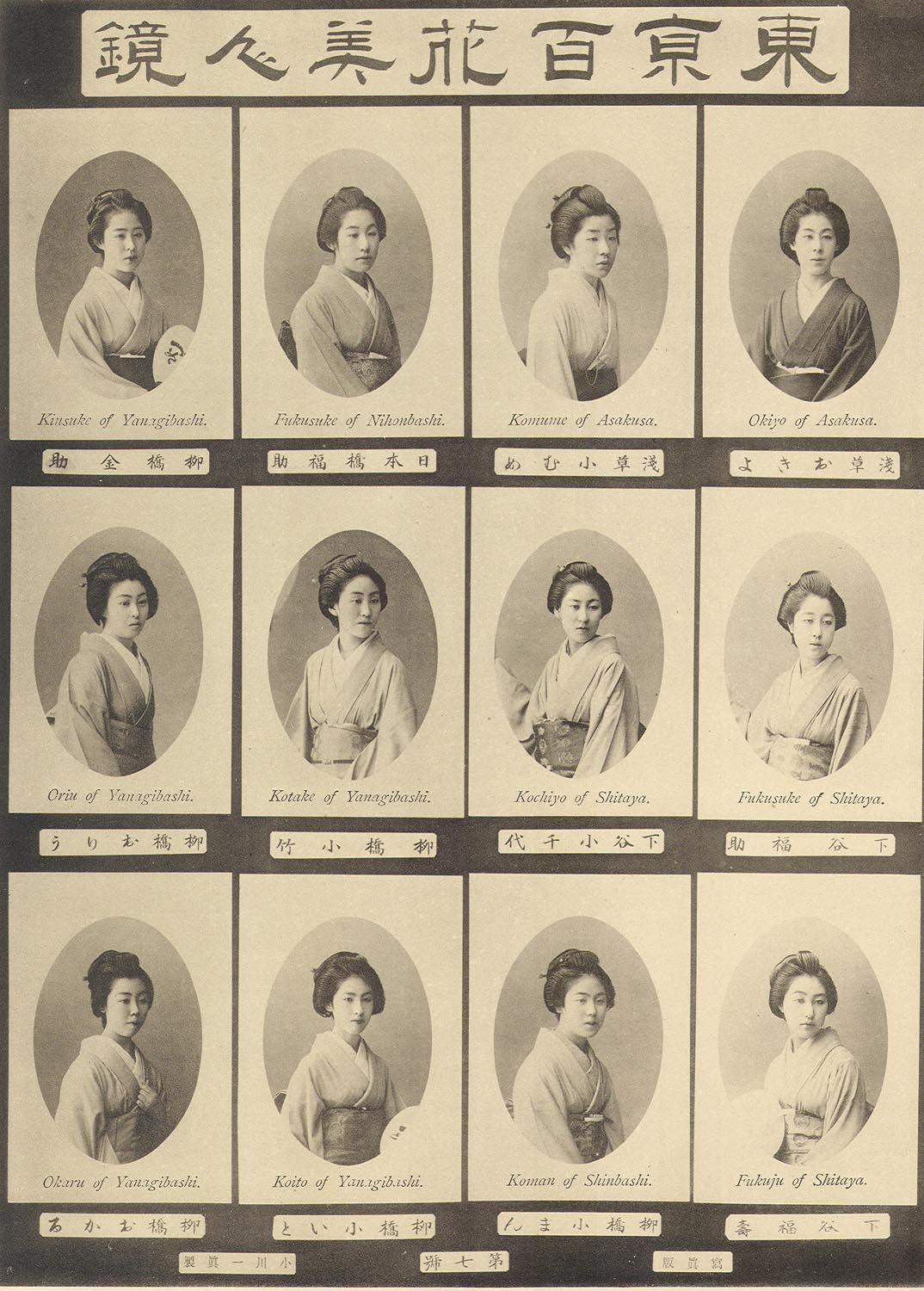
| Fukusuke | Doubly helpful (副助) | 1890’s 1930’s | Ogawa link |
| Fukusuzu | Fuku + bell (ふく鈴) | 2000’s | link |
| Fukuteru | Fuku + sunshine/light (ふく光) | 2000’s | link |
| Fukuya | 1920’s: Flourishing good fortune (福彌) 2000’s: Fuku + exclamation (ふく哉). Ya (哉) is difficult to translate—on its own, pronounced kana, it’s an exclamation of surprise or sorrow, but it appears in other words as a sound of exclamation or wondering. My best guess is that it was imported back when Japanese scholars were assigning kanji to every single word or syllable, Chinese-style, so just like modern Chinese has characters for the “Ha!” of laughter, ya or kana got a now-obsolete kanji. If you assume fuku is intended to stand for 福, Fukuya means something like “exclamation at one’s good fortune.” | 1920’s 2000’s | 1928 Kamogawa Odori 2010 Kyo Odori |
| Fukuyo | Fortunate generation (福代) | 1910’s | 1913 Miyako Odori |
| Fukuyoshi | Fuku + good, excellent (ふく好) | 2000’s | link |
| Fukuyū | Possessing abundance for a long time (冨久有) | 2000’s | 2010 Kyo Odori |
| Fumi | 1930’s: Fortunate beauty (富美) 2000’s?: Written in hiragana: ふみ. A traditional name meaning “feminine literary composition.” | 1930’s 2000’s? | link Shinbashikumiai |
| Fumichiyo | Abundantly beautiful for eternity (富美千代) | 1940’s | 1966 Miyako Odori Iwasaki |
| Fumichō | Abundantly beautiful butterfly (富美蝶) | 2000’s? | link |
| Fumihana | Abundantly beautiful and excellent (富美英) | 2000’s | link |
| Fumiko | 1910’s: Probably “feminine literary composition + child (章子)” 1960’s: Two-three child (二三子) | 1910’s 1960’s | Fujimoto 1968 Calendar |
| Fumino | 1960’s: Husband + beautiful + no [name ending] (夫美之) 2010’s: Feminine literary composition + field [name ending] (章乃). The effect is probably similar to naming a girl Sonnet. | 1960’s 2010’s | 1968 Calendar link |
| Fumukazu | The feminine literary composition of a beautiful/excellent official (章佳司) | 2000’s? | link |
| Fusakichi | Probably “fortunate tassel (房吉)” | 1870’s | link |
| Fusako | Tassel child (房子) | 1910’s | 1913 Miyako Odori |
| Fusao | Written in hiragana: ふさを | 1810’s | Urakusai |



Updated 12/16/2014