| Name | Meaning | Era by Decade | Source |
|---|---|---|---|
| Machi | Written in hiragana: おまち. Machi (町) was a common girl’s name of the period that meant “town.” | 1890’s | Ogawa |
| Mamefusa | Bean + tassel (豆 房), possibly connoting “little tiny tassel.” | 2000’s | link |
| Mamegiku | Mame + chrysanthemum (まめ菊). May be intended to mean “bean + chrysanthemum,” or “little tiny chrysanthemum.” | 1990’s? | link |
| Mamehana | Bean + hana (豆はな). Possibly intended to mean “bean + blossom,” or “little tiny blossom.” | 2000’s | link |
| Mameharu | Mame + spring (まめ春). Possibly intended to mean bean + spring, or “little tiny spring.” | 2000’s | link |
| Mamehide | Bean + excellent; little tiny excellent one (豆英) | 2000’s | link |
| Mamehiro | Bean + broad, vast, wide (豆弘). Hiro 弘 is a traditional Japanese girl’s name, so Mamehiro may mean “little tiny Hiro.” | 1980’s | Bacchus Magazine 1987 |
| Mameka | Bean + flower; little tiny flower (豆花) | 1990’s | link |
| Mamekichi | Lucky bean (豆吉), or little tiny lucky one | 1910’s | Fujimoto |
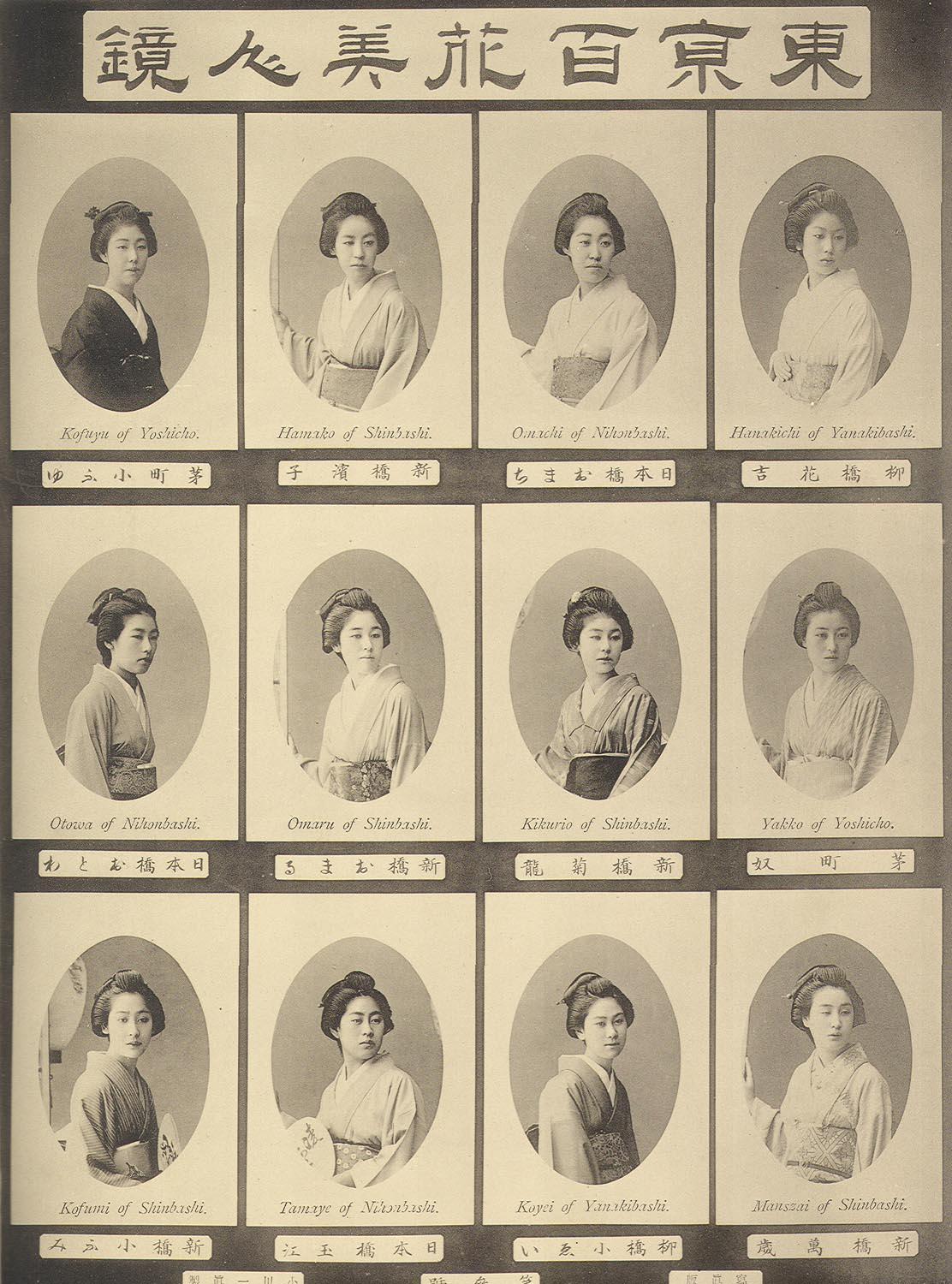
| Mameko | Bean child, or little tiny one (豆子) | 1890’s | Ogawa |
| Mameraku | Possibly “bean + delight (豆樂)” | 1930’s | link |
| Mameriki | Bean + strong (豆力), possibly meaning “little tiny strong one.” | 1910’s 1920’s | 1920 Kamogawa Odori 1928 Miyako Odori |
| Mameroku | Bean + six (豆六) | 2010’s | link |
| Mameryō | Bean + dragon (豆龍), possibly meaning “little tiny dragon” | 1970’s | link |
| Mametarō | Bean oldest son (豆太郎), implying “little tiny oldest son.” | 1910’s | 1913 Miyako Odori |
| Mameyakko | Bean handmaiden; little tiny handmaiden (豆奴) | 1910’s | Fujimoto |
| Mameyo | Mame + generation (まめ代), possibly intended to mean “bean generation (豆代).” Yo is a common ending for female names, so豆代 could be translated as a variation upon “little tiny one.” | 1990’s | link |
| Mameyoshi | Beautiful bean; beautiful little thing (豆美) | 1990’s | link |
| Mameyū | Mame + courage (まめ勇). Possibly intended to mean “little tiny courageous one (豆勇).” | 1960’s | 1968 Calendar |
| Manryū, Manryō | Countless dragons (萬龍) | 1900’s | link Lanston 1913 Miyako Odori |
| Manzai | Ten thousand years of age (萬歲 [歳?]), meaning “may the bearer live ten thousand years.” | 1910’s | 1918 Naniwa Odori |
| Maru | Written in hiragana: おまる. Maru (丸) was a common girl’s name of the period, meaning “round.” It also implied perfection, since the circle (丸) was the symbol of perfection. | 1890’s | Ogawa |
| Masuwaka | Box + youth (升若). A masu (升) was a measuring box that contained 1.8 liters; it was also a seating box at a theater. | 1910’s | 1918 Naniwa Odori |
| Matsukichi | As auspicious (or fortunate) as the pine tree (松吉) | 1910’s | 1918 Naniwa Odori |
| Matsuko | Pine tree child (松子) | 1910’s | Fujimoto |
| Matsuko | Happiness/good fortune of the pine tree (松幸) | 1910’s | 1918 Naniwa Odori |
| Matsuriki | Strength of the pine tree (松力), which is so steadfast that it stays green even in the depths of winter. | 1910’s | 1918 Naniwa Odori |
| Matsutarō | Pine tree + oldest son (松太郎) | 1910’s | 1913 Miyako Odori |
| Matsuyakko | Pine tree + handmaiden (松奴) | 1910’s | 1918 Naniwa Odori |
| Miharu | Beautiful springtime (美 春) | 2000’s | link |
| Mineko | 1960’s: Summit child (峰子) 1980’s: Child of the beautiful year of good fortune (美年子) | 1960’s 1980’s | 1968 Calendar Iwasaki Bacchus Magazine 1987 |
| Mitsu | Written in hiragana: おみつ. Mitsu (光) was a common girl’s name of the period, meaning “ray of light” or “sunlight.” | 1890’s | Ogawa |
| Mitsugiku | Three chrysanthemums, or third chrysanthemum (三菊) | 1890’s | Hearn2 |
| Mitsuha | 1910’s | Fujimoto | |
| Mitsuko | Sunlight child or light child (光子) | 1910’s | 1913 Miyako Odori |
| Mitsuyo | Generation of light (光代) | 1910’s | Zenkoku no Daihyouteki Bijin |
| Miyagiku | Shrine chrysanthemum (宮菊) | 1810’s | Urakusai |
| Miyakichi | Possibly a misspelling of Miyokichi. | 1870’s | Satow |
| Miyo | Beautiful generation (美代) | 1910’s | link |
| Miyoha | Leaf of the beautiful generation (美代葉) | 1960’s | 1968 Calendar |
| Miyoharu | 1980’s: Spring of the beautiful generation (美代春) 2000’s: Reign of the beautiful generation, or peace of the beautiful generation (美代治) | 1980’s 2000’s | Bacchus Magazine 1987 link link |
| Miyoka | Miyo + perfume (みよ香) | 1910’s | 1913 Miyako Odori |
| Miyokichi | 1910’s: The good fortune of the beautiful generation (美代吉) | 1870’s 1910’s | Satow 1913 Miyako Odori |
| Miyozuru | 1930’s: Beautiful generation + crane (美代鶴) | 1910’s 1930’s | Fujimoto 1933 Miyako Odori |
| Momifuku | Momi + good fortune (もみ福) | 2010’s | link |
| Momiji | Maple tree (possibly 椛 or 栴) ; or autumn leaves as they turn color | 1910’s 1990’s? | Fujimoto link |
| Momochiyo | Eternal peach (桃千代) | 1910’s | 1913 Miyako Odori |
| Momoko | Peach child (桃子) | 1890’s | Ogawa |
| Momomaru | Perfect peach (桃丸) | 1930’s | link |
| Momoyakko | 1910’s, 1920’s: Peach handmaiden (桃奴) 1960’s: One hundred + handmaiden(百奴) | 1910’s 1920’s 1960’s? | 1913 Miyako Odori link link |
| Momozuru, Momotsuru | One hundred cranes (百腿) | 1930’s | link link |
| Mondo | One of the first female geisha of the Yoshiwara. | 1760’s | link |
| Moto | 1910’s | Fujimoto | |
| Motoya | 1910’s | Fujimoto | |
| Naka | Written in hiragana: なか | 1910’s | 1913 Miyako Odori |
| Nakakichi | 1910’s | Fujimoto | |
| Naochiyo | Even more than a thousand generations (尚千代) | 2000’s | link |
| Naosome | Even more + some (尚そめ) | 2000’s | link |
| Naosono | Even more + sono (尚その) | 2000’s | 2005 Kyoto Hanamachi Book |
| Narako | 1910’s | Fujimoto | |
| Narayone | 1910’s | Fujimoto | |
| Oimatsu | Grow as old as the long-lived pine tree (老松) | 1920’s | link |
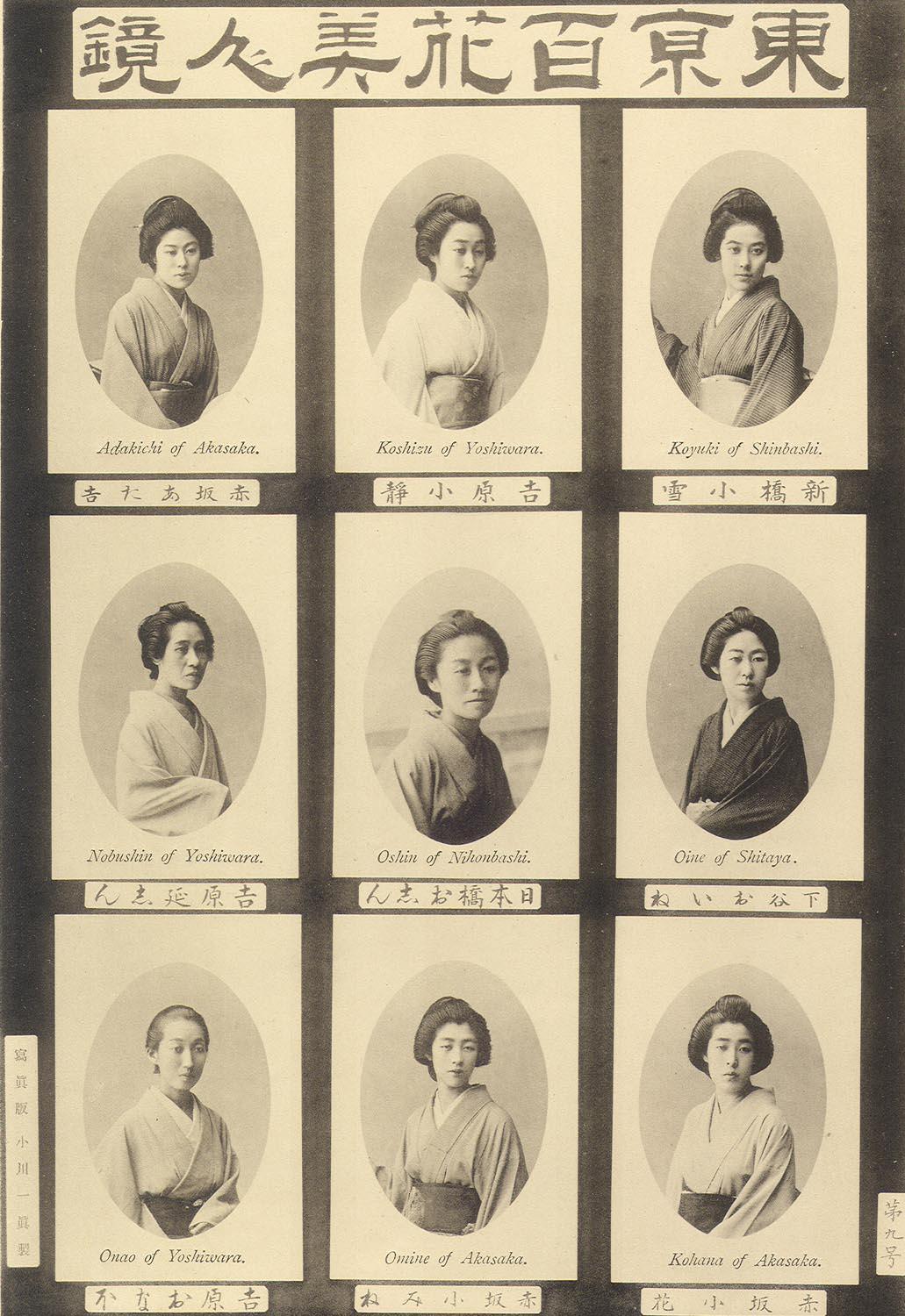
| Omine | Little + mine [hiragana] (小みね), possibly referring to the popular girl’s name meaning “summit (峯, 峰, 嶺).” | 1890’s | Ogawa |
| Omocha | Toy (玩具 or おもちゃ) | 1870’s | Satow |
| Onao | Ona + not, bad (おな不). A bewildering name. Possibly な不 was a respelling of the common girl’s name Nao (直), meaning “straightforward, honest,” and お was the honorific O-. | 1890’s | Ogawa |
| Otomaru | Perfect sound (音丸) | 1900’s | link |
| Otoyu | Second friend (乙友) | 1960’s? | link |
| Ponta | Generous one (ぽん太) | 1890’s | link link Lanston |
| Ran | One of the first female geisha of the Yoshiwara. | 1760’s | link |
| Ren | Written in hiragana: れん. Ren, or “lotus (蓮),” was an uncommon girl’s name that a Japanese author described in 1916 as “romantic and aristocratic.” [link] | 1910’s | 1913 Miyako Odori |
| Riki | Joyful advantage (利喜) | 1910’s | 1918 Naniwa Odori |
| Rikigo | Joyful advantage + five (利喜吾) | 1910’s | 1918 Naniwa Odori |
| Rikiha | Strength + leaf (力葉) | 1910’s | 1918 Naniwa Odori |
| Rikiharu | Strength + springtime (力春) | 1910’s | 1918 Naniwa Odori |
| Rikihei | Strength and peace (力平) | 1910’s | 1918 Naniwa Odori |
| Rikiji | Strength + second (力二) | 1910’s | 1918 Naniwa Odori |
| Rikikazu | Strength + first son (力一) | 1910’s | 1918 Naniwa Odori |
| Rikiko | Strength and happiness/good fortune (力幸) | 1910’s | 1918 Naniwa Odori |
| Rikio | Strength + –o [male name ending] (力雄) | 1910’s | 1918 Naniwa Odori |
| Rikiryū | Strength of the dragon (力龍) | 1910’s | 1918 Naniwa Odori |
| Rikisaburō or Rikizaburō | Strong third son (力三郎) | 1910’s | 1918 Naniwa Odori |
| Rikiya | Full of strength, completely strong (力彌) | 1910’s 1920’s | 1913 Miyako Odori 1928 Kamogawa Odori |
| Rikiyakko | Probably “strong maidservant (力奴).” | 1910’s | Fujimoto |
| Rikizō | Strong third son (力三) | 1910’s | 1918 Naniwa Odori |
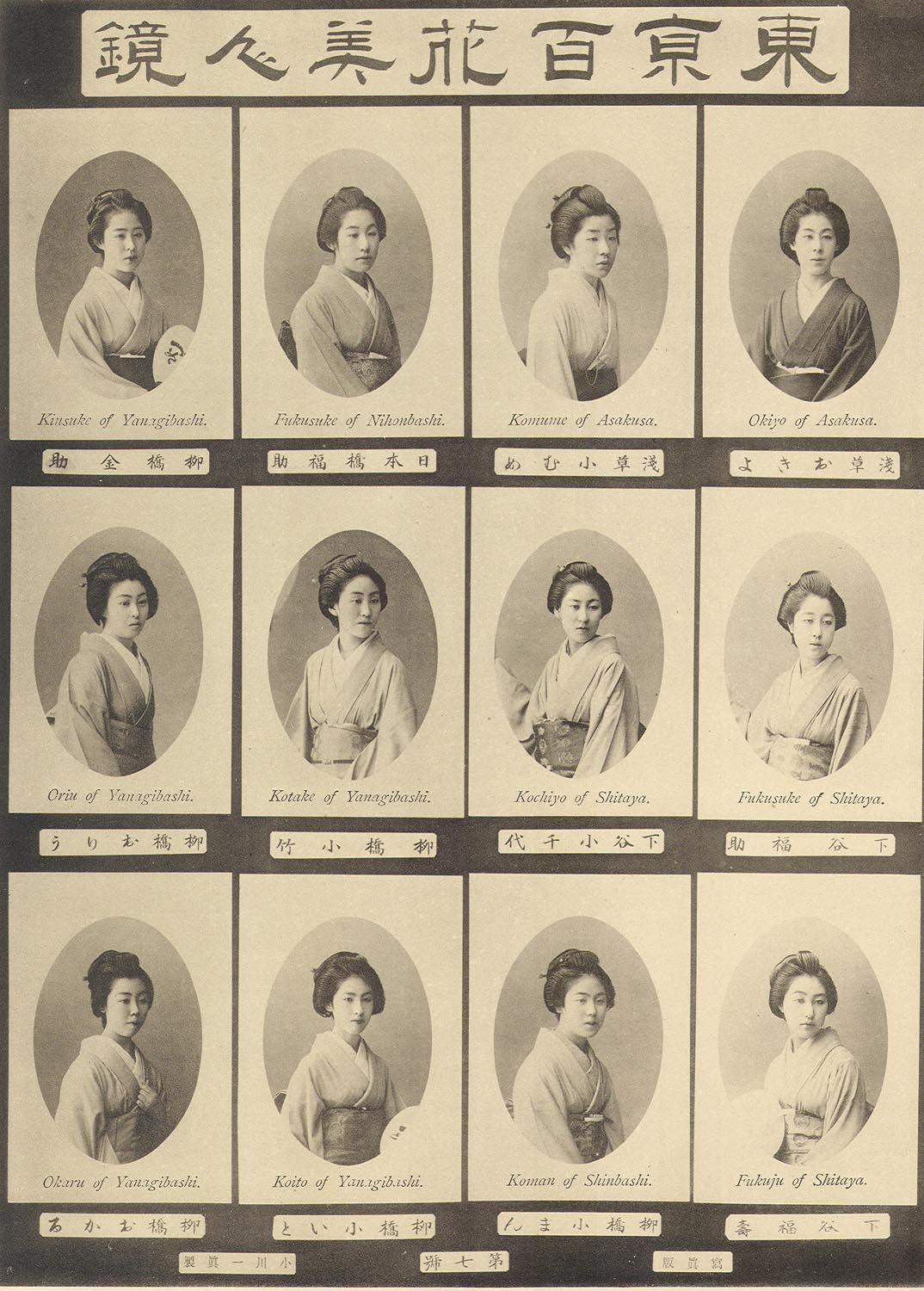
| Riu | Written in hiragana: りう | 1890’s | Ogawa |
| Ronokichi | Literally “good luck of the backbone (呂之吉).” | 1910’s | 1918 Naniwa Odori |
| Royo | Ro + generation (ろ代 ). | 1910’s | 1918 Naniwa Odori |
| Ryūko | Dragon child (龍子) | 1910’s | 1918 Naniwa Odori |
| Saizō | 1910’s: Talented third son (才三). | 1870’s 1910’s | Satow 1918 Naniwa Odori |
| Sakae | Glory, prosperity (栄え, also written さかえ) | 1910’s | link |
| Sakiko | Precious gossamer (紗貴子) | 2000’s | link |
| Sakyō | Left + capital (左京) | 1880’s | Toyohara Chikanobu |
| Sana | Written in hiragana: さな | 1900’s | link |
| Sanae | Possibly “rice seedling (早苗)” | 1930’s | link |
| Sankatsu | Three + victory (三勝), possibly implying “threefold victory.” | 1910’s | 1918 Naniwa Odori |
| Sanko | Third child (三子) | 1890’s | Ogawa |
| Sanya | Third full/complete one (三彌) | 1910’s | 1913 Miyako Odori |
| Sasa | Bamboo grass (笹) | 1790’s | Eishōsai Chōki |
| Sato | Written in hiragana: さと. Sato (里) was a common girl’s name of the period, meaning “village” or “hometown.” | 1810’s | Urakusai |
| Satochiyo | Village + eternity (里千代) | 1910’s | Zenkoku no Daihyouteki Bijin |
| Satogiku | Village chrysanthemum (里菊) | 1910’s | 1913 Miyako Odori |
| Satoji | Second village (里二) | 1910’s | 1913 Miyako Odori |
| Satoka | Village + perfume (里香) | 1980’s 2010’s | Bacchus Magazine 1987 link |
| Satokichi | Fortunate village (里吉) | 1810’s 1910’s | Urakusai 1920 Kamogawa Odori |
| Satomi | Village + beauty (里美) | 2000’s | link link |
| Satono | Village + no [name ending] (里乃). | 2000’s | link |
| Satoryū | Sato + dragon (さと龍) | 2010’s | link |
| Satotsuya | Village + tsuya (里つや) | 2000’s | link |
| Satoyū | 1910’s: Village courage (里勇) 2000’s: Sato + evening (さと夕) | 1910’s 2000’s | 1913 Miyako Odori 2005 Kyoto Hanamachi Book |
| Satoyuki | Sato + fortunate, blessed (さと幸) | 2000’s | link |
| Satsuki | Gossamer moon (紗月) | 2010’s | link |
| Sayaka | Gossamer + arrow + pleasing, skilled, excellent (紗矢佳) | 2000’s | link |
| Sayoko | Sand + previous + child (沙予子) | 1960’s | 1968 Calendar |
| Sekka | Snow perfume (雪香), geimei of the famous geisha later known as Morgan Oyuki. | 1890’s | link |
| Sen | Sen was a common girl’s name of the period, referring to the sennin (仙人), or “wood fairies.” Lafcadio Hearn says the name “expresses… the parents’ hope of long life for their daughter and her offspring,—wood-fairies being supposed to live for thousands of years.” | 1870’s | Satow |
| Shichi-go-san-yakko | Seven-five-three handmaiden (七五三奴). Possibly referring to the Shichi-Go-San children’s festival? The numbers may also be auspicious, or may refer to an important date in the woman’s life. | 1910’s | 1918 Naniwa Odori |
| Shimekichi | The sum of good fortune? (乄吉) | 1890’s | Ogawa |
| Shimematsu | Total, sum + pine tree (乄松) | 1910’s | 1918 Naniwa Odori |
| Shinneji | 1890’s | Hearn2 | |
| Shizu | Written in hiragana: おしづ. Shizu was a common girl’s name of the period, meaning “tranquil” or “calm of soul” and written静. | 1890’s | Ogawa |
| Shizue, Shizuye | Quiet inlet, or peaceful lake (静江) | 1910’s | link Lanston |
| Shizuko | Tranquil happiness (靜幸). | 1910’s | 1918 Naniwa Odori |
| Shun | Written in hiragana: おしゅん. Shun (俊?) was a common girl’s name of the period, meaning “excellence.” | 1890’s | Ogawa |
| Sodeko | Sode + child (そで子). Sode is a traditional girl’s name that means “sleeves,” referring to the hanging sleeves of traditional kimono. | 1910’s | Zenkoku no Daihyouteki Bijin |
| Somagiku | Dyed chrysanthemum (染菊), implying something brilliantly colored | 1930’s | link |
| Somekichi | Possibly color/dye + good fortune (染吉) | 1870’s | link |
| Somezō | Dye + third son (染三). Dyeing implies lots of bright color. | 1910’s | 1918 Naniwa Odori |
| Soyo | Written in hiragana: そよ | 1890’s | Ogawa |
| Sue | A traditional girl’s name meaning “last (末),” reflecting her parents’ wish for her to be the last child they have. | 1810’s | Urakusai |
| Sumiko | One who is to be congratulated on her beauty, or one who has both longevity and beauty (壽美子) | 1910’s | 1913 Miyako Odori |
| Suzu | Suzu (鈴) was a common girl’s name of the period meaning “bell.” It could also mean “tin (錫),” implying that the girl had a character as strong as metal, but geisha were more likely to use “bell” in their geimei. | 1890’s | Ogawa |
| Suzuhachi | 1930’s: Eighth bell (鈴八), or bell of increasing prosperity | 1870’s 1930’s? | Satow 1961 Naka Kyo Gion Odori |
| Suzuka | Little bell + flower (鈴花) | 1910’s | 1918 Naniwa Odori |
| Suzuko | Bell child (鈴子) | 1990’s | link |




Updated 12/16/2014